Enquiry Now :  +91 8729000609, +91 7888398911 |
 info@plenumbiotech.com

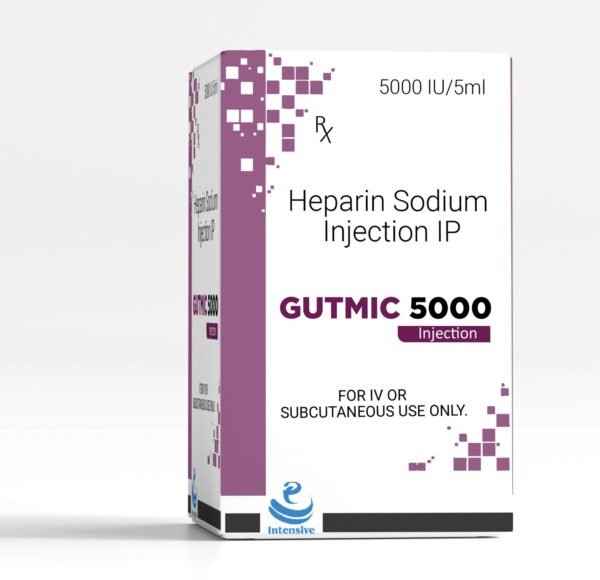
Heparin Injection IP | Gutmic
✔ WHO-GMP Certified Facility✔ 3000+ Products✔ 15+ Years Experience✔ Monopoly PCD Rights
What is Heparin Injection IP?
Gutmic injection is a brand name of Heparin Injection IP is an anticoagulant which is used to decrease the clotting of the blood and prevent harmful clots from forming in blood vessels. It is also called blood thinner and does not actually thin the blood. Heparin does dissolve blood clots that have already formed however prevent them from becoming larger and causing more serious problems.
Heparin is used in preventing or treating certain blood vessel, heart and lung conditions. It is also useful in preventing blood clotting during open-heart surgery, bypass surgery, kidney dialysis, and blood transfusions. It is used in low doses to prevent the formation of blood clots in certain patients, specially those who must have certain types of surgery. It is used to diagnose and treat a serious blood condition called disseminated intravascular coagulation.
Uses of Heparin Injection IP
Heparin Injection IP prevents the formation of blood clots. Treating and preventing blood clots caused by certain medical conditions or medical procedures also reduces the risk of blood clots before surgery.
- Preventing and Treating Blood Clots: Heparin is generally used to prevent and treat deep vein thrombosis (DVT), pulmonary embolism, and other conditions where blood clots can be life-threatening.
- Before Surgery: It may be given before surgical procedures to prevent blood clot formation during and after the operation. It is important in surgeries where blood flow is temporarily restricted, such as cardiac surgery.
- Hemodialysis: Heparin injection is used in hemodialysis procedures to prevent blood clotting in the dialysis machine and the dialysis circuit, which allows the patient’s blood to be effectively cleaned.
- Coagulation Disorders: It can be used to manage and treat certain coagulation disorders, such as disseminated intravascular coagulation (DIC) and heparin-induced thrombocytopenia (HIT).
- Continuous Intravenous Infusion: Heparin may be administered via continuous intravenous infusion to maintain anticoagulation in certain medical conditions, such as atrial fibrillation, which increases the risk of blood clots.
Precautions and side effects of Heparin Injection
Bleeding: Heparin injection can cause bleeding, especially if it is taken in too high of a dose or if it is taken with other medications that thin the blood. If you are taking this injection, it is important to be careful to avoid cuts, bruises, and other injuries. You should also avoid taking aspirin, ibuprofen, or other over-the-counter pain relievers, unless your doctor has specifically approved them.
Allergic reactions: Heparin injection can cause allergic reactions, ranging from mild to severe. Symptoms of an allergic reaction to heparin injection can include hives, itching, swelling, difficulty breathing, and chest pain. If you experience any of these symptoms, stop taking heparin injections and seek medical attention immediately.
Heparin-induced thrombocytopenia (HIT): HIT is a rare but serious side effect of heparin injection that can cause blood clots to form in the arteries. Symptoms of HIT can include fever, chills, headache, and a drop in platelet count. If you experience any of these symptoms while taking injection, contact your doctor immediately.
Side effects of Heparin Injection
- Allergic reactions
- Hair loss
- Pain, redness, or swelling at the injection site
- Low platelet count
- Liver problems
- Bone loss
- Nausea
If you experience any of these side effects, contact your healthcare provider. They may be able to adjust your dosage or prescribe other medications to help manage the side effects.
Frequently Asked Questions (FAQs) about Gutmic
What is Gutmic injection?
Gutmic is an injection containing heparin, an anticoagulant medicine. Anticoagulants reduce the blood’s ability to form clots. It is given in a hospital or clinical setting under medical supervision.
How does heparin prevent blood clots?
Heparin boosts the activity of a natural protein called antithrombin, which blocks key clotting factors such as thrombin and factor Xa. This slows the clotting process. Heparin does not dissolve existing clots but helps stop them from growing while the body breaks them down.
What is Gutmic injection used for?
Heparin is used to prevent and treat deep vein thrombosis and pulmonary embolism. It is also used during heart surgery, dialysis and some other procedures to keep blood from clotting, and in certain heart conditions. Its use depends on the doctor’s assessment.
How is Gutmic administered?
Heparin is given either into a vein (as an injection or continuous infusion) or under the skin (subcutaneously). It is not injected into a muscle, as this can cause bleeding and bruising. A doctor or nurse decides the dose and route.
Why are blood tests needed during heparin treatment?
The effect of heparin varies from person to person, so blood tests such as aPTT are used to adjust the dose when given intravenously. Platelet counts are also checked because heparin can lower platelets. Regular monitoring helps keep treatment within a safe range.
What are the common side effects of heparin?
Common effects include bruising, pain, redness or irritation at the injection site, and minor bleeding such as from the gums. Some people may notice easier bruising. Report any unusual bleeding to the medical team.
What signs of serious bleeding should be reported immediately?
Report at once any blood in urine or stools, black stools, vomiting blood, coughing up blood, heavy nosebleeds, severe headache, or unusual weakness. Large or growing bruises also need attention. These may indicate serious bleeding.
What is heparin-induced thrombocytopenia?
Heparin-induced thrombocytopenia (HIT) is an immune reaction in which platelet levels fall and, paradoxically, new clots may form. It usually appears several days after starting heparin. Doctors monitor platelet counts to detect it early.
Who should not receive Gutmic injection?
Heparin is generally avoided in people with active major bleeding, severe low platelet counts, a history of heparin-induced thrombocytopenia, or allergy to heparin. Conditions like recent brain bleeding or uncontrolled severe high blood pressure also need special caution. The doctor will evaluate the risks first.
Which patients need extra caution with heparin?
People with liver or kidney disease, stomach ulcers, recent surgery or injury, bleeding disorders, or the elderly need careful monitoring. Long-term use may affect bone density. The care team adjusts treatment accordingly.
Can heparin be used in pregnancy?
Heparin does not cross the placenta and is sometimes used in pregnancy when anticoagulation is needed, under specialist care. Some preparations contain preservatives such as benzyl alcohol, which may matter in pregnancy and newborns. The doctor decides the suitable product.
Is heparin safe during breastfeeding?
Heparin is not significantly passed into breast milk and is not absorbed when taken by mouth. It is therefore generally considered compatible with breastfeeding. Your doctor will confirm whether it is appropriate.
Which medicines can increase bleeding risk with Gutmic?
Aspirin, NSAID painkillers, clopidogrel and other antiplatelets, warfarin and other anticoagulants can increase bleeding risk with heparin. Some herbal products may also have an effect. Inform the doctor about all medicines and supplements.
Can heparin affect potassium levels?
Yes, heparin can occasionally raise potassium levels, especially in people with diabetes or kidney disease, or those on certain blood pressure medicines. Blood tests may be done during longer courses. Report muscle weakness or irregular heartbeat.
What precautions should I take while on heparin?
Use a soft toothbrush and an electric razor to reduce minor bleeding. Avoid activities with a high risk of injury. Tell any doctor or dentist treating you that you are receiving heparin.
What happens if a dose of Gutmic is missed?
Because heparin is given by healthcare professionals on a set schedule, a missed dose should be reported to the medical team. They will decide whether to give it or adjust the next dose. Do not attempt to double up.
How is Gutmic injection stored?
Heparin vials are usually stored at controlled room temperature, protected from light, and should not be frozen. Follow the storage instructions on the label. Vials should be handled by trained staff and kept out of reach of children.
Is Gutmic a prescription medicine?
Yes, heparin injection is a prescription-only medicine. It should be used only on the prescription of a registered medical practitioner and given under medical supervision. It is not meant for self-administration without training.
Is Gutmic injection available for PCD pharma franchise?
Yes, Gutmic is part of Plenum Biotech’s injectable range. Franchise partners and hospital suppliers can enquire about adding it to their portfolio. For franchise or monopoly enquiries, call +91-8729000609.
Can hospitals and distributors source Gutmic from Plenum Biotech?
Hospitals, institutional suppliers and distributors can contact Plenum Biotech for supply details of Gutmic heparin injection. The team can share packing and availability. Call +91-8729000609.
Related products: Pregnancy Test Kit | Plenews | Cefpodoxime Potassium Clavulanate Suspension | Podojet CV Suspension | Fondaparinux Sodium Injection | Frinux S
Explore range: Anti-Biotic/Anti-Fungal/Anti-Infective | General Range | PCD Pharma Franchise with Plenum Biotech
Learn more about the ingredients: Heparin (Wikipedia)
Want PCD Franchise / Monopoly for Gutmic?
Join Plenum Biotech — WHO-GMP quality range, promotional support and monopoly rights in your area.