Enquiry Now :  +91 8729000609, +91 7888398911 |
 info@plenumbiotech.com

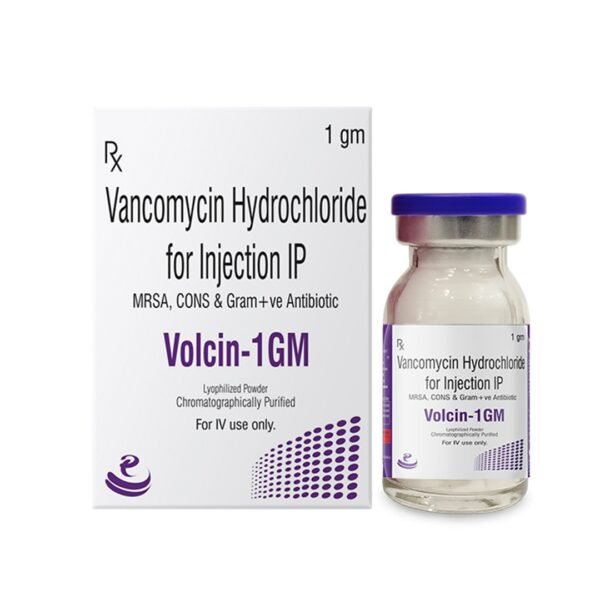


Vancomycin Hydrochloride for Injection | Volcin-1 Gm
Vancomycin Hydrochloride for Injection | Volcin-1 Gm – Powerful Antibiotic for Serious Infections
Severe bacterial infections require strong and reliable antibiotic therapy for effective treatment. Vancomycin Hydrochloride for Injection | Volcin-1 Gm is a potent antibiotic used in hospitals to treat life-threatening infections caused by resistant bacteria. It plays a crucial role in modern healthcare, especially in managing infections that do not respond to standard antibiotics.
What Is Vancomycin Hydrochloride for Injection | Volcin-1 Gm?
Volcin-1 Gm contains Vancomycin Hydrochloride, a glycopeptide antibiotic that works by inhibiting bacterial cell wall synthesis. It is primarily effective against gram-positive bacteria, including resistant strains such as MRSA (Methicillin-resistant Staphylococcus aureus).
- Strength: 1 Gm per vial
- Formulation: Injectable (intravenous infusion)
- Category: Glycopeptide antibiotic
Vancomycin is widely used in hospitals under strict medical supervision for serious infections that require immediate and effective treatment.
Benefits of Vancomycin Hydrochloride for Injection | Volcin-1 Gm
1. Effective Against Resistant Bacteria
Volcin-1 Gm is highly effective against antibiotic-resistant bacteria, including MRSA, making it a critical treatment option in modern medicine.
2. Treats Severe Infections
It is used to manage serious infections such as bloodstream infections, pneumonia, and bone infections.
3. Rapid Action
Vancomycin works quickly to inhibit bacterial growth, helping control infection progression and reduce complications.
4. Hospital-Grade Treatment
Administered intravenously, Volcin-1 Gm ensures precise dosing and effective delivery in critical conditions.
5. Proven Clinical Efficacy
Vancomycin has been a trusted antibiotic for decades, supported by extensive clinical use and research.
How Vancomycin Hydrochloride for Injection | Volcin-1 Gm Works
Volcin-1 Gm works by:
- Inhibiting Cell Wall Synthesis: Prevents bacteria from forming protective cell walls, leading to bacterial death
- Targeting Gram-Positive Bacteria: Effective against organisms such as Staphylococcus, Streptococcus, and Enterococcus
- Combating Resistant Strains: Acts against bacteria that have developed resistance to other antibiotics
This mechanism ensures effective treatment of severe and resistant infections.
Common Uses of Volcin-1 Gm
Vancomycin Hydrochloride for Injection | Volcin-1 Gm is commonly used for:
- Severe skin and soft tissue infections
- Bloodstream infections (septicemia)
- Pneumonia caused by gram-positive bacteria
- Bone and joint infections (osteomyelitis)
- Endocarditis (infection of the heart lining)
- Infections caused by MRSA and other resistant organisms
It is often reserved for serious infections where other antibiotics are ineffective.
How to Use Vancomycin Hydrochloride for Injection | Volcin-1 Gm
- Administered intravenously under medical supervision
- Dosage depends on the severity of infection, body weight, and kidney function
- Infused slowly over a specified period to avoid side effects
- Regular monitoring of blood levels may be required
- Always follow hospital protocols and doctor’s instructions
Proper administration ensures effective treatment while minimizing risks.
Who Can Benefit From Volcin-1 Gm?
Vancomycin Hydrochloride for Injection | Volcin-1 Gm is suitable for:
- Patients with severe or life-threatening bacterial infections
- Individuals with infections resistant to other antibiotics
- Hospitalized patients requiring intravenous antibiotic therapy
- Patients undergoing surgery or at risk of serious infections
It is not typically used for mild infections and should only be administered under professional supervision.
Safety and Precautions
- Use only under strict medical supervision
- Inform your doctor about kidney disease, hearing problems, or allergies
- Regular monitoring of kidney function and drug levels may be required
- Avoid self-administration or misuse
- Use cautiously in elderly patients and those with renal impairment
Potential Side Effects
Volcin-1 Gm may cause some side effects, including:
- Injection site reactions such as pain or redness
- Fever or chills
- Kidney function changes (nephrotoxicity)
- Hearing issues in rare cases (ototoxicity)
- “Red man syndrome” if infused too rapidly (flushing, rash)
Immediate medical attention is required if severe reactions occur.
Advantages of Choosing Vancomycin Hydrochloride for Injection | Volcin-1 Gm
- Highly effective against resistant bacterial strains
- Essential for treating severe and life-threatening infections
- Rapid and targeted antibacterial action
- Proven safety and efficacy in clinical settings
- Reliable hospital-grade antibiotic therapy
Lifestyle and Care Tips During Treatment
While receiving Vancomycin Hydrochloride for Injection | Volcin-1 Gm:
- Stay hydrated to support kidney function
- Follow hospital guidelines strictly
- Avoid self-medication with other antibiotics
- Report any unusual symptoms immediately
- Maintain proper hygiene to prevent infection spread
Patient Experience
Patients treated with Volcin-1 Gm often experience:
- Rapid control of infection symptoms
- Improvement in fever, inflammation, and overall condition
- Effective management of resistant infections
- Safe and monitored treatment in hospital settings
These outcomes highlight the importance of Vancomycin Hydrochloride for Injection | Volcin-1 Gm in critical care.
Conclusion
Serious bacterial infections require powerful and reliable treatment options. Vancomycin Hydrochloride for Injection | Volcin-1 Gm is a trusted antibiotic that plays a vital role in managing resistant and life-threatening infections.
With its strong antibacterial action, proven efficacy, and hospital-based administration, Volcin-1 Gm ensures effective infection control and improved patient outcomes. Proper medical supervision, adherence to treatment protocols, and monitoring are essential for safe and successful therapy.