Enquiry Now :  +91 8729000609, +91 7888398911 |
 info@plenumbiotech.com

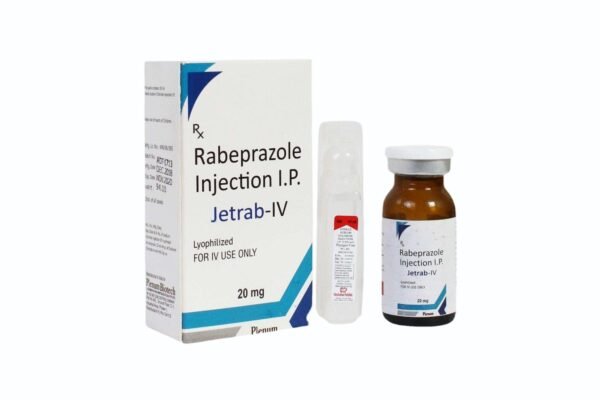
Rabeprazole Sodium 20mg Injection | Jetrab IV
✔ WHO-GMP Certified Facility✔ 3000+ Products✔ 15+ Years Experience✔ Monopoly PCD Rights
| BRAND NAME | JETRAB |
| COMPOSITION | RABEPRAZOLE 20MG INJECTIONS |
| PACKING | 1’S |
What is the Rabeprazole Sodium Injection?
Rabeprazole Sodium Injection, marketed as Jetrab IV, is a proton pump inhibitor (PPI) used to reduce excessive stomach acid production. It is commonly used in hospital settings when oral therapy is not feasible.
How It Works
Rabeprazole works by inhibiting the proton pump (H+/K+ ATPase) in the stomach lining, which is responsible for acid secretion. Blocking this enzyme, it effectively reduces gastric acid production and promotes healing of acid-related damage.
Indications
Jetrab IV is indicated in conditions such as gastroesophageal reflux disease (GERD), peptic ulcers, Zollinger-Ellison syndrome, and stress-related mucosal damage. It is also used in critically ill patients to prevent gastric bleeding.
Rabeprazole Sodium Injection Benefits
- Rapid reduction of stomach acid
- Promotes healing of ulcers and erosions
- Effective in GERD management
- Prevents stress-related gastric damage
- Suitable for intravenous use in hospitals
Usage
This injection is administered intravenously under medical supervision. Dosage depends on the patient’s condition and severity. Long-term use should be monitored as it may lead to vitamin deficiencies or increased risk of infections. Patients with liver disorders should use it cautiously.
Conclusion
Jetrab IV Injection is a reliable and effective solution for managing acid-related disorders, ensuring quick relief and protection of the gastrointestinal tract in critical care settings.
Frequently Asked Questions (FAQs) about Jetrab IV
What is Jetrab IV?
Jetrab IV is an injectable form of rabeprazole sodium 20 mg, a proton pump inhibitor (PPI). It lowers the amount of acid the stomach makes and is meant for situations where a patient cannot take acid-reducing tablets by mouth.
How does rabeprazole in Jetrab IV reduce stomach acid?
Rabeprazole blocks the H+/K+ ATPase enzyme, often called the proton pump, in the acid-producing cells of the stomach lining. Because this is the final step of acid secretion, blocking it reduces acid output substantially for many hours.
For which conditions may a doctor use Jetrab IV?
Doctors may use intravenous rabeprazole for acid-related problems such as gastroesophageal reflux disease, peptic ulcers, Zollinger-Ellison syndrome and prevention of stress-related mucosal injury in seriously ill patients. The exact use depends on the clinical situation and is decided by the treating doctor.
How is Jetrab IV given?
Jetrab IV is given into a vein by a doctor or nurse, usually in a hospital or clinic. It is not meant for self-injection, and the dose and duration are decided by the treating doctor.
Why would an injection be chosen instead of rabeprazole tablets?
An injection is generally used when a patient is nil by mouth, vomiting, unconscious or otherwise unable to swallow medicines. Once the patient can take oral medicines, the doctor may switch to tablets.
Does Jetrab IV have to be given before food?
Because Jetrab IV goes directly into the bloodstream, meal timing matters less than with tablets. The care team will schedule the doses, and patients should follow any feeding instructions given in hospital.
What side effects can occur with rabeprazole injection?
Commonly reported effects of PPIs include headache, diarrhoea, nausea, abdominal pain and dizziness. Pain or redness at the injection site can also occur, and any troublesome symptom should be reported to the nursing staff or doctor.
Which reactions to Jetrab IV need urgent attention?
Rash, swelling of the face or throat, breathing difficulty, severe or bloody diarrhoea, or unusual muscle cramps or irregular heartbeat should be reported immediately. These may point to an allergic reaction or other complication that needs prompt review.
Can Jetrab IV be used during pregnancy or breastfeeding?
Data on rabeprazole in pregnancy and breastfeeding are limited, so it is used only if the doctor considers the benefit to outweigh possible risk. Always inform the doctor if you are pregnant, planning pregnancy or breastfeeding.
Is Jetrab IV suitable for patients with liver problems?
Rabeprazole is processed mainly by the liver, so people with significant liver disease need caution and closer monitoring. The doctor will consider liver function when deciding whether and how to use it.
Can rabeprazole injection be given to children or elderly patients?
Use in children is decided only by a paediatric specialist, as experience with the injectable form in children is limited. Elderly patients can usually receive PPIs, but the doctor will consider their other illnesses and medicines.
Does Jetrab IV interact with other medicines?
By lowering stomach acid, rabeprazole can change how some medicines are absorbed, such as certain antifungals, iron preparations and some HIV medicines. It may also interact with drugs like methotrexate or warfarin, so the doctor should know about every medicine the patient takes.
What are the concerns with long-term PPI therapy such as rabeprazole?
Prolonged PPI use has been linked with low magnesium, low vitamin B12, a higher risk of some gut infections and bone fractures. Injectable rabeprazole is usually given for a short period, and longer therapy should be reviewed regularly by a doctor.
What happens if a scheduled dose of Jetrab IV is missed?
Since the injection is given by healthcare staff, they will decide when to give a delayed dose. A double dose should not be given to make up for a missed one.
How should Jetrab IV vials be stored?
Store the vials below 25 C, protected from light and moisture, and out of children’s reach. Once reconstituted, the solution should be used within the time stated on the pack insert.
What is the pack size of Jetrab IV?
Jetrab IV is supplied as a single vial containing rabeprazole sodium 20 mg for injection. Diluent or reconstitution details are given on the product pack.
Is a prescription needed for Jetrab IV?
Yes, this injection should be used only on the prescription of a registered medical practitioner. It must be administered by trained healthcare personnel.
Does Jetrab IV cause drowsiness or affect driving?
Rabeprazole rarely causes dizziness, but patients receiving it intravenously are usually in hospital and not driving. If dizziness occurs after discharge, avoid driving until it settles.
Is Jetrab IV available for PCD pharma franchise?
Yes, Jetrab IV is part of Plenum Biotech’s injectable range and is offered for PCD pharma franchise. For franchise or monopoly enquiries, call +91-8729000609.
Can hospitals and distributors order Jetrab IV in bulk?
Hospitals, pharmacies and distributors can contact Plenum Biotech regarding supply of Jetrab IV vials. Details on availability and territory rights are shared on +91-8729000609.
Related products: Ofloxacin 200mg Tablets | Cnof-200 | Terbinafine Mecobalamin Pyridoxine Ip Niacinamide Tablet | Feenum | Ceftriaxone 1000 Mg Sulbactam 500mg Injection | Ottacef-S-1.5
Explore range: Anti-Biotic/Anti-Fungal/Anti-Infective | PCD Pharma Franchise with Plenum Biotech
Learn more about the ingredients: Rabeprazole (Wikipedia)
Want PCD Franchise / Monopoly for Jetrab IV?
Join Plenum Biotech — WHO-GMP quality range, promotional support and monopoly rights in your area.